

Table of Content
Every year, millions of seekers undertake arduous journeys to Varanasi, Kashi, or the high shrines of the Himalayas. They stand in suffocating queues for hours, jostling for position in the heat, all for a fleeting one-second glimpse of a consecrated idol. Before they can even steady their breath, a temple guard pushes them forward, or the crowd behind shoves them aside.
They walk back into the crowded street with a peculiar heaviness in their chest. Yet, for months and even years afterward, they console themselves with a persistent hope: I have completed my yatra. I have seen the deity. Now, my life must magically change.
If the mere physical act of completing a pilgrimage or viewing a deity had the power to dissolve human sorrow, suffering would have disappeared from this earth centuries ago.
When one observes modern spiritual culture with uncompromising clarity, a sobering truth surfaces. Spiritual travel has largely devolved into commercial tourism. People shuttle from one shrine to another like runners in a frantic marathon, collecting selfies and checking off destinations, while the inner state remains completely untouched.
To understand why sacred spaces fail to transform us, we must look through the eyes of the ancient masters who looked beyond physical geography.
What the Ancient Siddhas Knew About the North
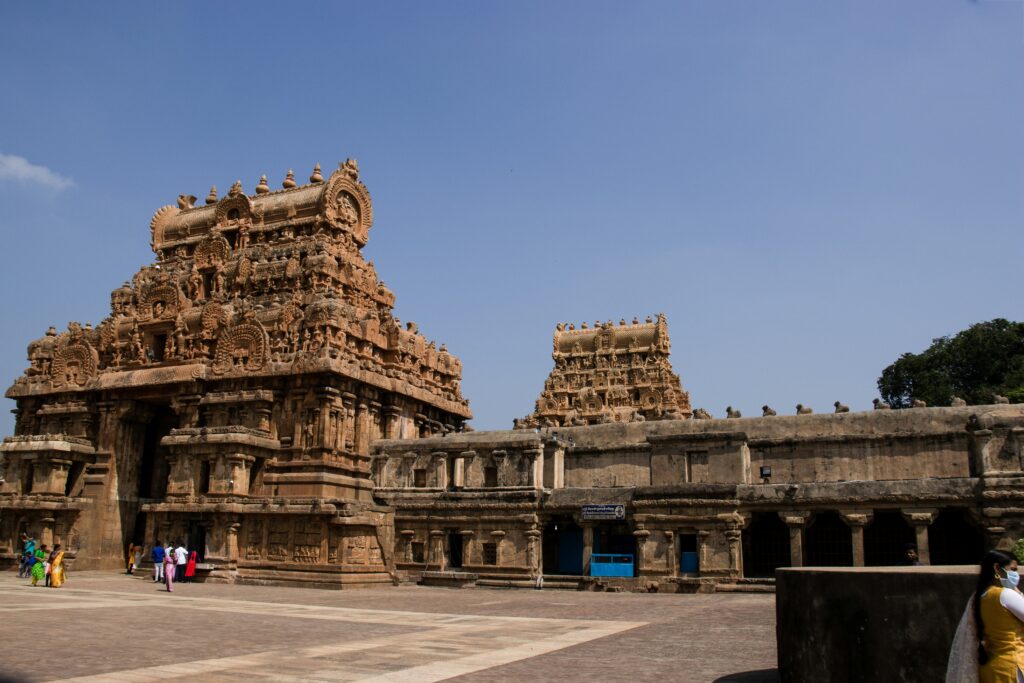
In the southern yogic traditions, particularly among the Tamil Siddhas, there is a bold and uncompromising verse regarding pilgrimage. The Siddhas stated that only the unawakened believe they must journey to the north—to Kashi or the icy peaks of the Himalayas—to attain liberation (Mukti).
They noted plainly: there is nothing in the north. The north can give you nothing that is not already present within your own existence.
This was not a dismissal of sacred architecture or consecrated energy fields. The Siddhas themselves were master engineers of temple consecrated spaces. Rather, it was a critique of the human mind’s tendency to mistake the external container for the internal substance. A person who travels thousands of miles looking for God outside is operating under the very ignorance that binds them. The divinity attributed to the north is an internal reality, accessible only through the stabilization of one’s own awareness.
A sacred space is more than what people imagine, yet far less than what their commercial desires demand. The stone structure itself cannot force an inner transformation upon a visitor who arrives with a scattered, consuming mind. For a sacred space to function, the seeker must possess Adhikara—the conscious readiness to perceive reality as it is, stripped of past conditioning, expectations, and mental chatter.
Manikarnika: The Unfiltered Threshold of Life and Death
Kashi offers something far more potent than sentimental comfort, but only if one is willing to see it without romance.
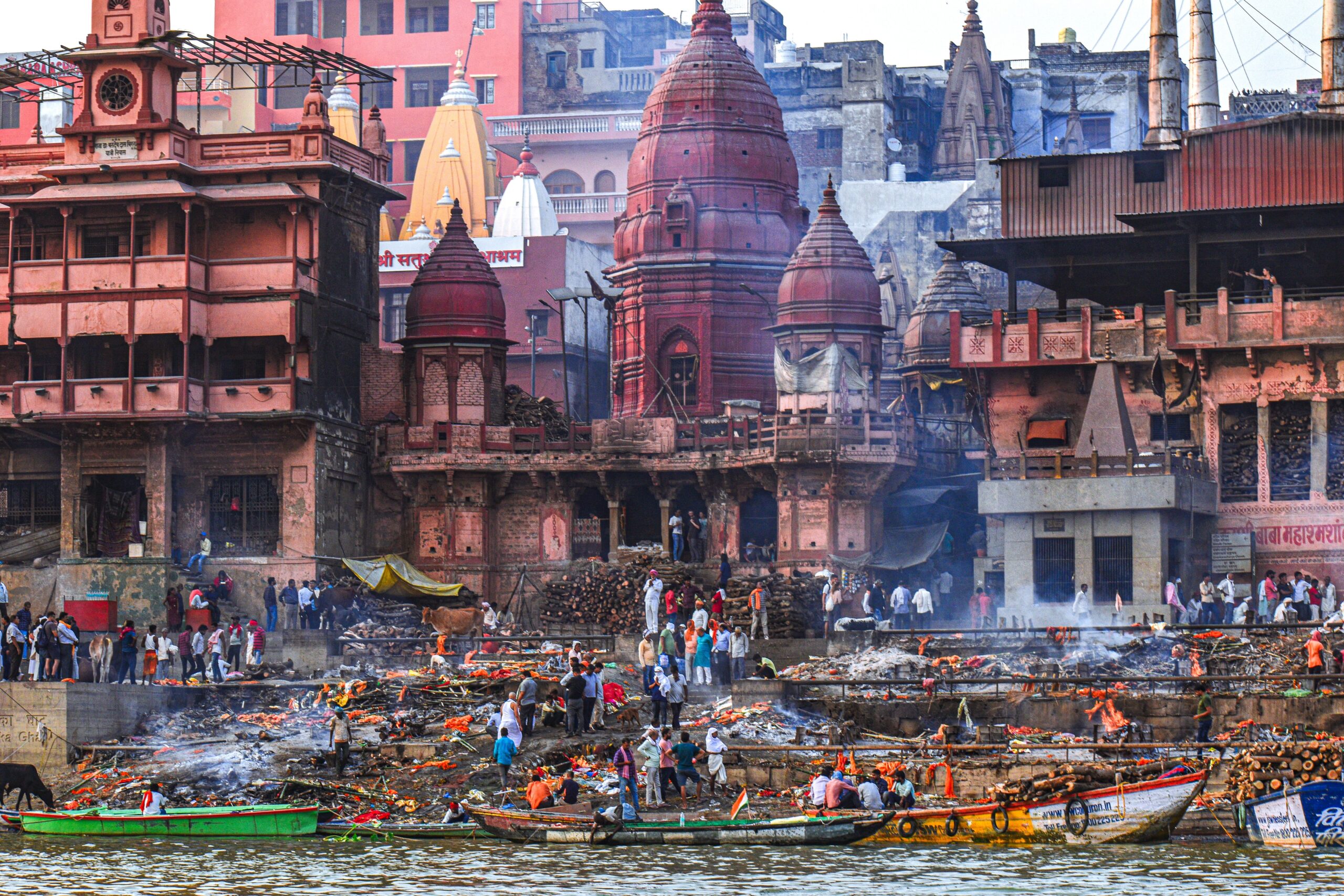
Beyond the popular evening rituals lies the true heart of the city: the cremation grounds of Manikarnika and Harishchandra Ghats. Here, there are no sanitized city rituals. The gullies are unpolished, cattle wander through narrow alleys, and the walls bear the marks of daily life. On the stone riverbank, ten bodies burn simultaneously on open wooden pyres. The dead are treated without theatrical sentimentality; a corpse is seen simply for what it is, a discarded physical instrument.
“Kashi integrates both life and death. It is the place where life ends, and for the conscious observer, it is the exact place where real life begins. While you watch another body turn to ash, you are forced to witness the impermanence of all your psychological securities.”
Death is the supreme teacher in Eastern inquiry. Standing by the flames of Manikarnika without turning away in disgust or fear dismantles our deepest delusions. For the individual on the pyre, every ambition, dispute, and material possession has evaporated. For the seeker standing nearby with conscious attention, Kashi reveals the raw boundary of existence.
When you stop avoiding the reality of death, you finally learn how to live without false dependencies.
The Insecurity Timeline: From the Womb to the Altar
Why do human beings turn toward temples with such desperation? The root cause is a lifelong sequence of insecurity that begins the moment we enter the world.
Consider human development from its origin:
- The Womb: Inside the mother, the unborn child exists in complete protection. Nourishment is delivered automatically; there is no hunger, no cold, and no separation.
- Birth: The moment the child emerges, it cries out. The first breath is an experience of acute insecurity, severed from absolute comfort.
- Childhood: As we grow, parental support buffers us. But the first day of school arrives, and the child cries again as it is left outside the family orbit.
- Adulthood: We step into the workforce to earn our bread, entering a terrain where parents can no longer fight our battles. A new tier of insecurity settles in.
- Loss and Bereavement: Eventually, the pillars of our early life pass away. When a parent or partner dies, a permanent void opens. We realize no human being can fill that space, and the illusion of safety collapses entirely.
When an individual discovers that no person, bank balance, or social standing can shield them from the inevitable changes of life, they make God their final emergency contact.
They pray not out of surrender, but out of a desperate desire to protect their comfort zone. And when life refuses to obey their prayers, they fall into disillusionment.
Nature has not left humanity helpless. When you are hungry, the universe does not place food directly into your stomach; it gives you hands, teeth, and a digestive system to process it. Similarly, the tools required to navigate psychological distress and attain unwavering peace are already built into your energetic anatomy. The difficulty is that human attention is scattered in ten directions at once. With fragmented attention, no peace can be sustained.
Practical Sadhana: Bringing the Temple Within
Visiting a sacred space is not forbidden, but treating it like a spiritual amusement park is pointless. If you visit a temple or a burning ghat, go with absolute, unhurried attention:
- Breathe the space: Do not rush through queues to tick a box. Sit down quietly on the stone steps.
- Drop the shopping list: Stop bargaining with the divine for career, health, or financial outcomes. Observe the atmosphere without judgment or expectation.
- Anchor the spine: Sit with an upright spine, release the shoulders, and place bare awareness on the central axis of your spinal cord. Let your breath move along that pillar naturally.
The purpose of a temple is not to hold your peace in trust for you. Its sole purpose is to shock you out of mental noise so you can remember your natural state of stillness. That stillness must not be abandoned at the temple gate; it must be carried back into your family life, your work, and your daily challenges.
The Pathless Path: Rewiring The Being
True liberation cannot be achieved by confining yourself to dogmatic cages. Many believe spirituality requires an artificial, puritanical lifestyle: denying basic human functions, obsessing over rigid rules, or hiding behind external saintliness.
Confinement is what the traditions call Sankocha (contraction). Real freedom is Vikasa (expansion). The ultimate state of consciousness is a pathless path leading to a groundless ground. It demands no theatrical penance; it only asks for sincere involvement and raw attention.
To bridge this ancient realization with modern, practical living, Sriguru Ashwathama created Rewiring The Being (RWB), a structured 8-stage path of inner engineering:
- Stages 1 to 5: A complete curriculum of classical yogic sciences, breath mastery, nervous system stabilization, and subtle perception. Once completed, a seeker possesses every internal tool required for worldly balance and spiritual depth.
- Stages 6 to 8: The distillation of Aghora. Stripped of sensationalism, this phase works with high-voltage energetic circuits to speed up the dissolution of karmic loops. Because higher sadhanas require an unshakeable container, progression is carefully guided to ensure the vessel is ready.
You do not need to journey to the Himalayas to find liberation. The roads are laid, the internal map is prepared, and the work begins right where you are sitting.
WATCH THE FULL SATSANG:
https://youtu.be/Vo_aa_VddyU
To explore upcoming classes and begin your journey with Stage 1, visit the Adipara Foundation Connect Portal.
May you be blessed with peace and harmony, within and without.